Mostrando entradas con la etiqueta inglés. Mostrar todas las entradas

lunes, 7 de mayo de 2018

Cognitive Development: Its Cultural and Social Foundations - A. R. Luria


Alexander Romanovich Luria, one of the most influential psychologists of the twentieth century, is best known for his pioneering work on the development of language and thought, mental retardation, and the cortical organization of higher mental processes. Virtually unnoticed has been his major contribution to the understanding of cultural differences in thinking.

sábado, 5 de mayo de 2018

Modular Cognitive-Behavioral Therapy for Childhood Anxiety Disorders - Bruce F. Chorpita

This clinically wise and pragmatic book presents a systematic approach for treating any form of childhood anxiety using proven exposure-based techniques. What makes this rigorously tested modular treatment unique is that it is explicitly designed with flexibility and individualization in mind. Developed in a real-world, highly diverse community mental health context, the treatment can be continually adjusted to target motivational problems, disruptive behavior, family issues, and other frequently encountered clinical roadblocks. In a large-size format for easy photocopying, the book includes a detailed case formulation framework, a flexible treatment planning algorithm, and over 90 pages of user-friendly reproducibles.


Executive Functions and the Frontal Lobes: A Lifespan Perspective (Studies on Neuropsychology, Neurology and Cognition) - Vicki Anderson, Rani Jacobs, Peter J. Anderson


This volume has as its primary aim the examination of issues concerning executive function and frontal lobe development. While many texts have addressed these issues, this is the first to do so within a specifically developmental framework.

This area of cognitive function has received increasing attention over the past decade, and it is now established that the frontal lobes, and associated executive functions, are critical for efficient functioning in daily life. It is also clear, and of particular relevance to this text, that these functions develop gradually through childhood, and then deteriorate during old age. These developmental trajectories, and the impact of any interruption to them, are the focus of this volume.


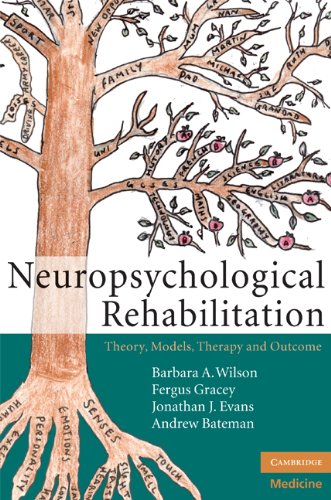
Neuropsychological Rehabilitation: Theory, Models, Therapy and Outcome - Barbara A. Wilson OBE, Fergus Gracey, Jonathan J. Evans, Andrew Bateman


The aim of neuropsychological rehabilitation is to enable people with cognitive, emotional, or behavioural deficits to achieve their maximum potential in the domains of psychological, social, leisure, vocational or everyday functioning. Describing the holistic programme devised and adopted at the world famous Oliver Zangwill Centre and embracing a broad theoretical base, incorporating a variety of frameworks, theories and models, this book proposes an integrated approach to brain injury rehabilitation by an interdisciplinary team. The coverage explains the underlying principles involved, describes the group therapies employed, highlights a selection of real case examples and reviews the outcomes measured and achieved. This book is essential reading for clinical neuropsychologists, clinical psychologists, speech and language therapists, occupational therapists, psychiatrists, neurologists, physiotherapists, social workers and nurses.

Cognition and Brain Development: Converging Evidence From Various Methodologies - Bhoomika Rastogi Kar, PhD


Research in brain cognition and development has expanded rapidly over the last ten years. Our scientific understanding of the developmental stages of infancy, childhood, and adolescence has reached a new level of sophistication, thanks to extensive studies on cognitive processes such as attention, inhibition, executive control, working memory, language, spatial cognition, lexical access, and emotional processing.

In this book, an elite group of international contributors presents the latest advances in the science of cognitive development. The authors work at some of the world's most prestigious labs across North America, Europe, and Southeast Asia and their diverse linguistic backgrounds permit especially interesting work on language and cognition.

  • They explore such issues asthe role of dopamine in ADHD
  • the development of self-consciousness and ethics
  • the use of functional MRI in epilepsy patients
  • the crucial role of culture in the development of language

New, converging methodologies derived from behavioral experimentation, electrophysiology, eye tracking, genetics, and neuroimaging studies characterize this research. Together, the chapters demonstrate a truly international and holistic approach to understanding human cognition and brain development.